Back To The Home Page

To Contact Us

Useful Information

Other Sites

The collection


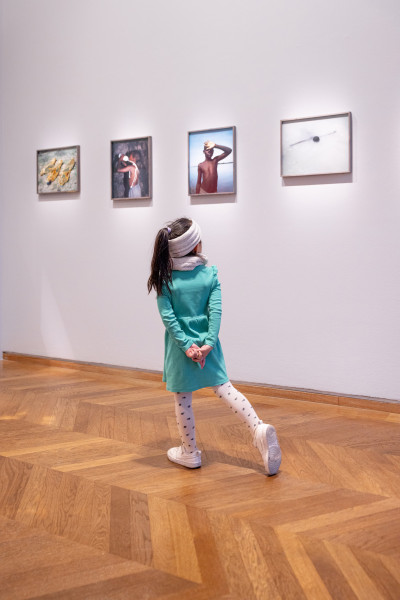
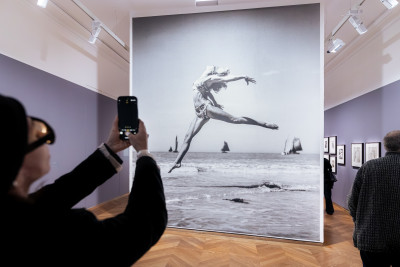
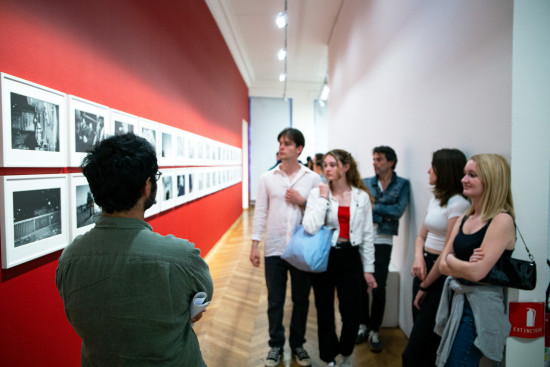
The Maison Européenne de la Photographie has some 12, 000 sq.ft of exhibition space on several floors. New selections of works from our permanent collections are shown regularly in addition to the temporary exhibitions.

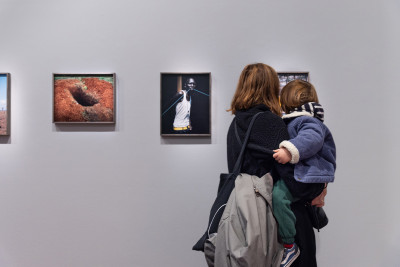
The third-floor galleries house the permanent collection of the Maison Européenne de la Photographie. Established in the early eighties, it consists of over 15, 000 works and is representative of international photography from the end of the 1950s to the present day. The acquisition of several complete series of photographs ( including Robert Frank's 'Les Américains', Josef Koudela's 'Prague 1968' and Raymond Depardon's 'Correspondance new-yorkaise') has made it possible to organize coherent monographic exhibitions. Major donations have also augmented the collection, for example from Dai Nippon Printing (Tokyo) and the Reader's Digest Foundation. The Polaroid Company of Boston has placed 1500 original Polaroid prints in trust of the centre, and an entire gallery is devoted to the works of Irving Penn, one of the greatest photographers of the second half of the twentieth century.

The permanent collection reflects the art of photography in all its various forms, from photojournalism to fashion photography to works that stand halfway between photography and the plastic arts.

The Irving Penn Gallery

The Polaroid Gallery

The Dai Nippon Donation


The Irving Penn Gallery
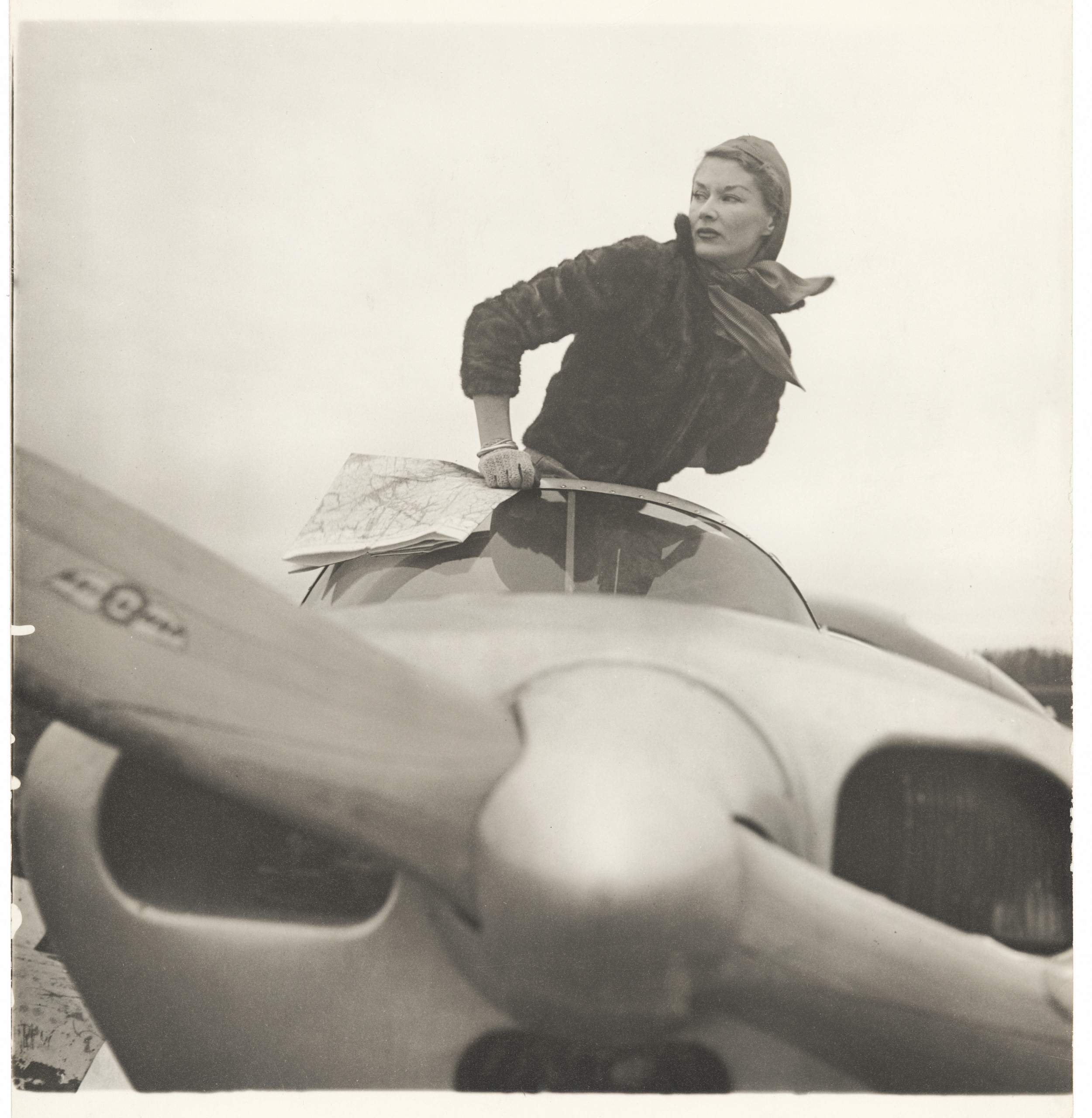
Several figures have dominated photography in the second half of the twentieth century. Irving Penn is undoubtedly one. His work is representative of a whole area of illustrative magazine photography. What makes him an original is the way he manages to be creative while carrying out commissioned work through his approach to form and photographic material. His increasing influence on younger generations and the amount of work he has done in France explain and justify his inclusion in the collection and the opening of the room which bears his name.


Biography

Born in 1917 in Plainfield, New Jersey. In 1934, he enrolled at the Museum School of Industrial Art in Philadelphia, where he studied design with Alexey Brodovitch. In 1938, he began a career in New York as a graphic artist. Then, after a year spent painting in Mexico, he returned to New York City and went to work at Vogue magazine where Alexander Liberman was art director. Liberman encouraged Penn to take his first color photograph, a still life which became the October 1, 1943 cover of Vogue. Thus began an extaordinary fruitful collaboration that continues to this day. In addition to his editorial and fashion work for Vogue, Penn has photographed for other magazines and for various commercial clients in America and abroad. In 1947 he began taking portraits of artists and writers in a spare style, with the subject in front of a bare grey background in an empty space.

His pictures are characterised by sharp contrasts between form and content. Whatever he is photographing, Penn always imposes the same procedure on his subject - natives in Peru (1970), New Guinea (1970) and Morocco (1971), or cigarette butts (1972), materials found in the street (1975) or still lives (1980) - he takes away the subject's natural setting, context, actual situation. Although this approach may seem somewhat anthropological, the highly refined treatment of the picture, the warm and soft tones of his printing technique, platinum/palladium, clearly show the priority which he gives to the aesthetic and artistic dimension.
 

The Polaroid Gallery
In the nineteen forties, the founder of Polaroid, Dr. Edwin Land, realised that instant photography was a quite exceptional mode of creative expression because it provided high-quality pictures immediately. It occurred to him that the Polaroid should be a means of expression for everyone observing the world around them. So, for more than thirty years, the Polaroid company has offered selected photographers the opportunity to experiment with Polaroid equipment in return for a choice of the pictures they take. Attracted by the idea of the Maison Européenne de la Photographie and aware of its impact in Europe, Polaroid Cambridge, represented by Mrs.Barbara Hitchcock, has decided to loan a prestigious collection of 1,500 original pictures reassembled and selectionned by M. Jan HNIZDO.

This collection, which will be revised regularly, is on display in the Polaroid Gallery.
 

The Dai Nippon Donation
In 1992, on the initiative of its chairman Mr Yoshitoshi Kitajima, Dai Nippon Printing Co. Ltd., a large Japanese printing company founded in 1876, decided to assemble a large collection of Japanese photographs for the Maison Europèenne de la Photographie, and to add to that collection each year.

The latest acquisitions (1997) include a series of photographs on Hiroshima by Hiromi Tsuchida, spanning more than thirty years. Another important figure is Hiroshi Sugimoto, whose "Theaters" series involves theaters which have been converted into cinemas. To create these photographs he exposes film throughout the duration of a movie, when the house is lit only by the screen. Finally, Toshio Shibata is emerging as one of the leading new-generation photographers: his work focuses on expressions of conflict in nature and civilization.

The works of these three photographers are exhibited alongside those of Nobuyoshi Araki, Masnhisa Fukase, Eikoh HosoÎ, Daido Moriyama, Ikko Narahara, Shomei Tomatsu and Hiroshi Yamazaki. They form the backbone of a representative collection of contemporary Japanese photography comprising more than three hundred original prints.